note : I wrote this paper last year during a Boston Architectural College, International Heritage Conservation course, Course instructor : Eleni Glekas. The course is a part of a faculty exchange program between the National College of Arts, Lahore and Boston Architectural College. It was not mandatory for the faculty to write a paper but I wrote this voluntarily as I see this as a part of an ongoing research. My first project to manifest this research as a point of investigation was a part of a collaborative-participatory visual art project by artist Filippo Minelli; it was displayed in the European Nomadic manifesta biennale, in Palermo, Italy 2018 – link : https://sehrjalil.com/2018/09/13/manifesta-biennale-2018/
Statement:
Is every legendary artist’s home, heritage? Which factors, values and procedures decipher and declare the status of an artist’s home? This paper will interrogate the question with the help of two divergent case studies, 23 Sir Ganga Ram Mansion, Lahore, Pakistan, artist Amrita Sher-Gil’s abode and 21120 Highway 84, Abiquiu, NM 87510, USA, Georgia Okeeffe’s abode.
——————————————————————————————————
Amrita Sher Gil was a Sikh-Hungarian Indian artist who chose ‘23 Sir Ganga Ram Mansion, Lahore’ as her last home in the world. The Ganga Ram Street is capsuled in time, sublime, pink-facades, Victorian, French, colonial, open verandas and no boundary walls; it lives behind the madness and hustle bustle of the historic Mall road Lahore. Initially my concerns revolved around why the abode of the legendary Amrita Sher Gil has no heritage value and what factors could contribute to change the perception and declare it ‘the heritage / home of an artist’ but the concern evolved during summer 2018. I visited Georgia O’Keeffe’s home and studio 21120 Highway 84, Abiquiu, NM 87510 in June.
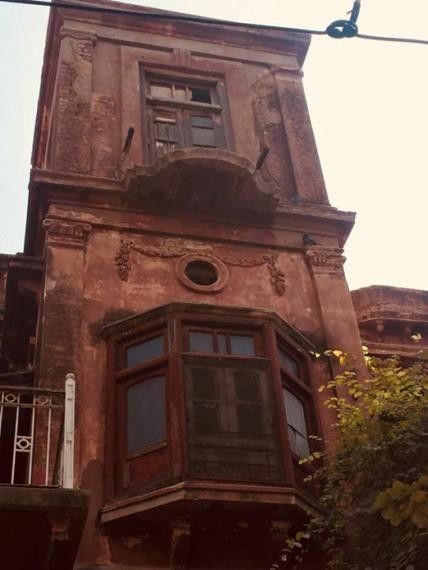
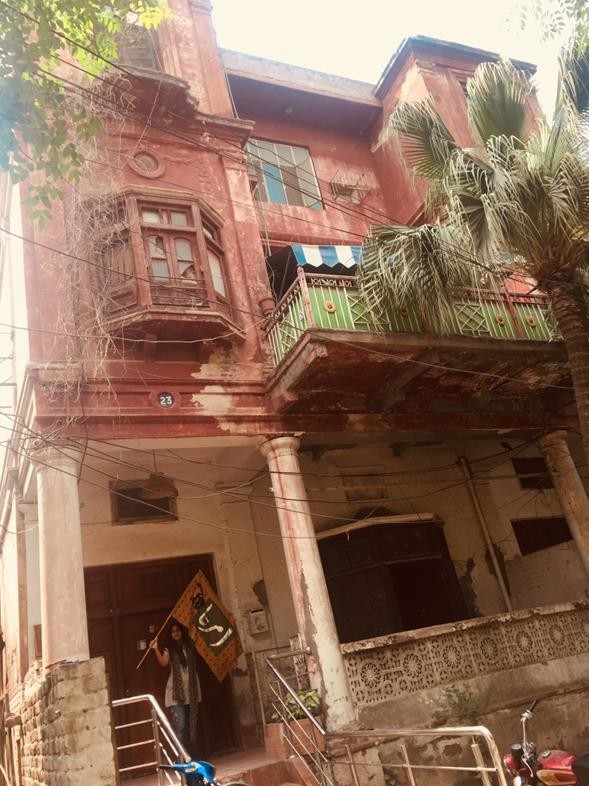
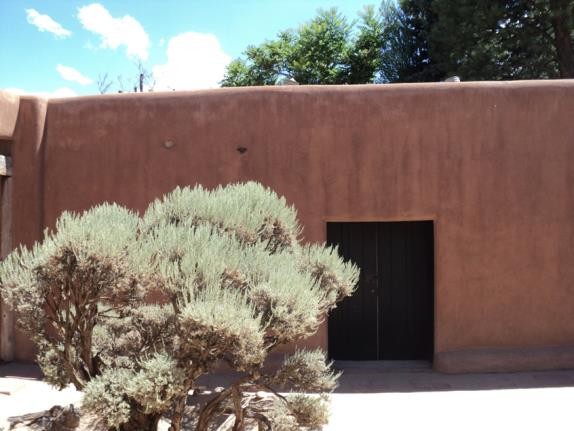
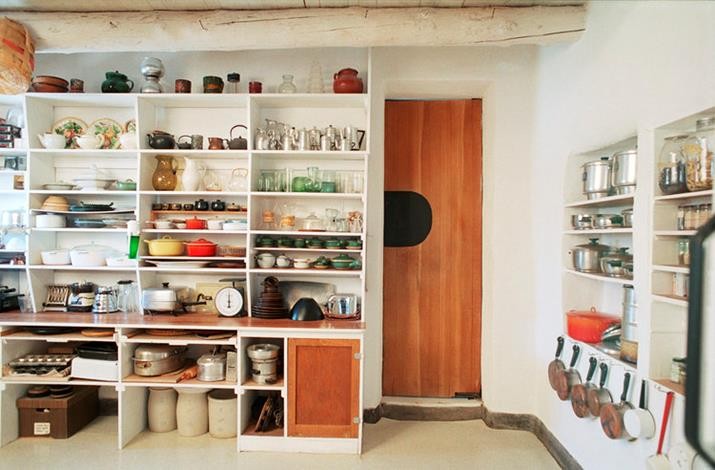
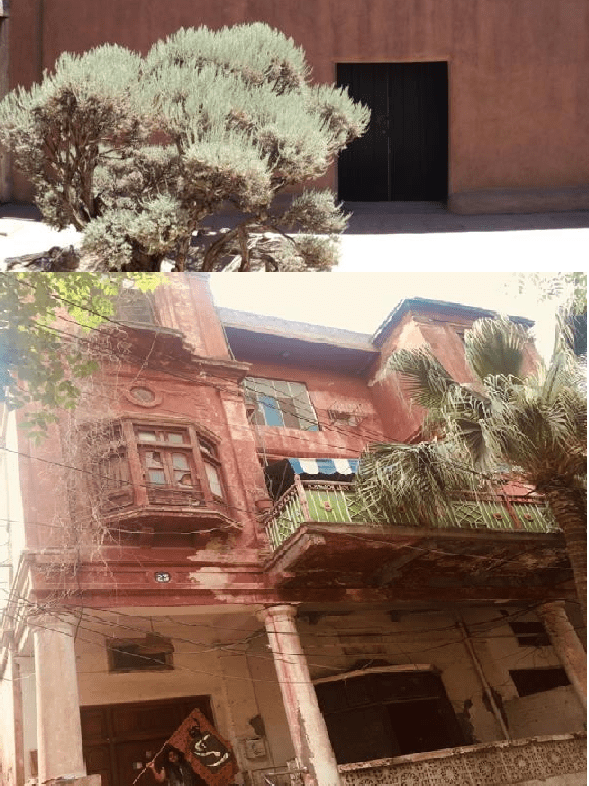
While Sher Gil’s abode was deserted and not looked after for many years
O’keeffe’s place gained the status of a museum and her belongings and
‘etiquette of objects-and- life’ were preserved, I may say with the eloquence
of a ‘pause-button’ where time stops – and all remains as it is. Sher Gil’s
place is a regular legal/law office with unkempt shelves and offices in the
lower portion and a residence for a middle income family of a state employee in
the upper portion. The rooms have been painted and done up in colors and
aesthetics which please the resident family. The family is very congenial,
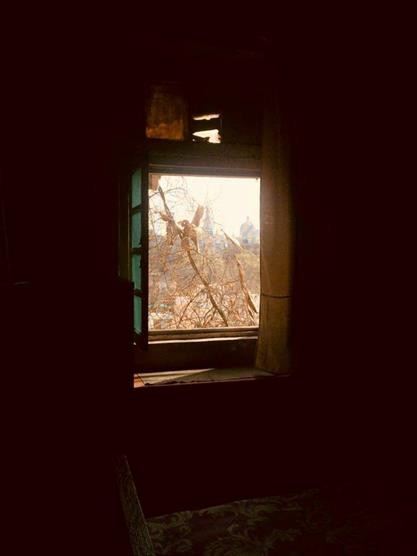
aware of the home’s Sher Gil-past and warmly allow looking around, last year I
spent an afternoon and had tea with them, looking at Lahore through Sher Gil’s
studio window, rooftop and balcony. While walking through the O’Keeffe
wonderland, her garden, utensils, pantry, furniture, sense of
design-art-genius, radio(music) in every room, minimalism, modernism, color,
contemporariness, art of solitude, closet, fashion, books, knowledge, I also
kept thinking about Sher Gil’s abode.
My concerns escalated to a comparison between these two ‘homes of artists’. One in Abiquiu and the other in Lahore. O’Keeffe (1887 – 1986) and Sher Gil (1913 – 1941) were contemporaries. Sher Gil took her training from Ecole de beaux, Paris while O’Keeffe went to the Institute of Chicago. Sher Gil was influenced by Matisse, Gauguin and others but went on to find her own voice, a euro – Indian palette and local visual vocabulary, O’Keeffe found that haven in the scape of Abiquiu and objects, flowers and bones which came from that land, including the epic views of/from her beautiful home.
I would like to initiate my survey with a sense of loss and pain that resonates with the varying gradients of value heritage is given as per ideology, ignorance and understanding – an example from a Beirut (CNN) article highly resonates with it:
“In the back garden of Beirut’s Villa Paradiso house there’s a single date palm tree, a species endemic to Lebanon, with a dramatic swooping trunk. Wrapped in fairy lights, it’s undeniably charming. It’s popular with visitors to the house’s events and exhibitions. But when asked about it, pain clouds owner Remi Feghali’s face. There was a miscommunication with a worker, he explains. He chopped down all the baby trees around the mother. I still feel physical pain when thinking about it. This is a symbol of what is wrong with this country’s approach to heritage. We leave only the one most beautiful thing as an example, while tearing down everything else that contextualizes it. The destruction of Lebanese architectural heritage, a concern since the first high-rises began to replace the gardens of historic Ras Beirut in the 1950s, has accelerated at an alarming rate in the last 20 or so years” (d’Arc Taylor, 2015)
“We leave only the one most beautiful thing as an example, while tearing down everything else that contextualizes it” (d’Arc Taylor, 2015). This example is also in synch with global opposites and situations where one artist’s home can be a phenomenon while the other a regular, unnoticed and lived in regular abode – as history and context have been overlapped, lost, abandoned and confused in time, the challenge to decipher and allocate value is steep and complex.
In reference to these case studies it is important to give some reference of relevant heritage home examples which have been considered by UNESCO. The outstanding universal value of the Luis Barragán House and Studio built 1947-1948, is denoted as an “outstanding example of the architect’s creative work in the post-Second World War period” (Centre, n.d.) – it is located in the working class suburbs of Mexico City. It also mentions that “The architect’s integration of modern design with traditional Mexican vernacular elements has been greatly influential” (Centre, n.d.). Chosen criterions under i and ii are as follows:
“… Represent a masterpiece of the new developments in the Modern Movement, integrating traditional, philosophical and artistic currents into a new synthesis …” (Centre, n.d.)
The work of Luis Barragán exhibits the integration of modern and
traditional influences, which in turn have had an important impact especially
on the design of gardens and urban landscapes” (Centre, n.d.)
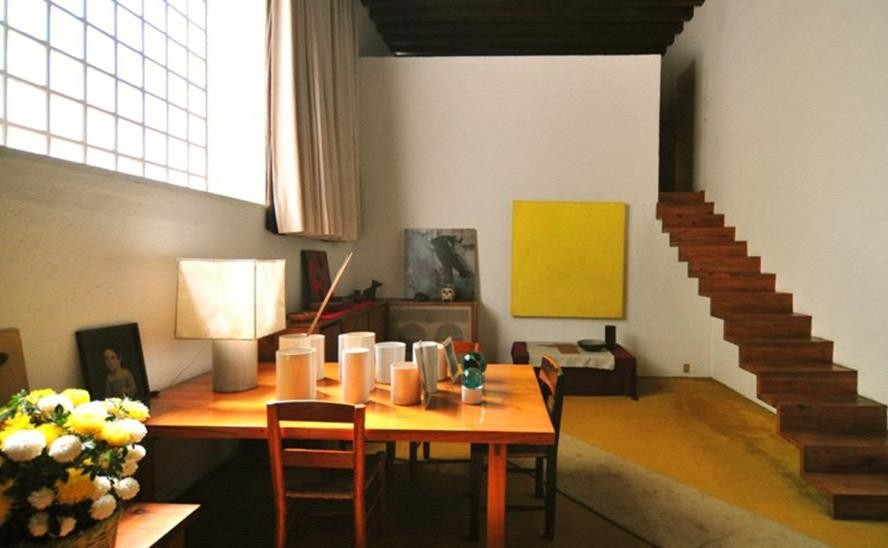
Its integrity comprised in the following:
“Luis Barragán believed that ‘a house is never finished; it is an organism in constant evolution’. The value of the property’s integrity resides in the fact that these modifications represent an autobiographic document of the artist and the evolution of his ideas. Moreover it is conserved in its entirety including kitchen installations and the owner’s Cadillac” (Centre, n.d.)
Amrita Shergill’s home is integral considering the works she produced in
that time. Her paintings of Lahore from an aerial view painted from her studio
window were created there and they are pivotal observations in her role of a
sub-continent, south Asian modernist yet its current existence does not reflect
any of those values. As opposed to that Okeeffe’s home and studio share a
similar essence but a different situation:
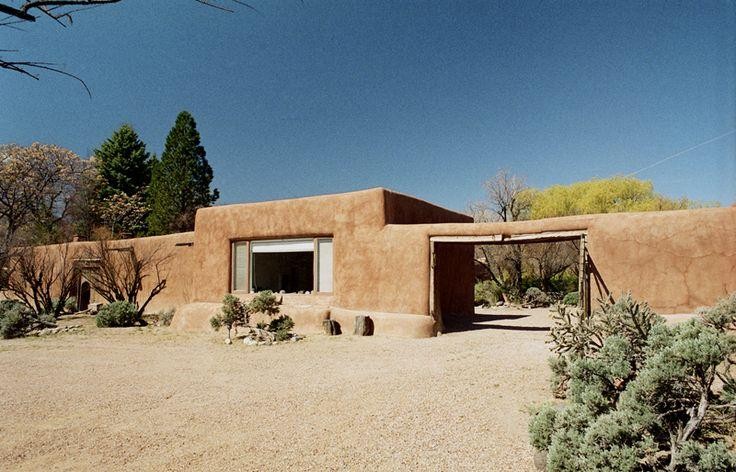
“The New Mexican home and studio that Georgia O’Keeffe (1887–1986) designed for herself in the tiny village of Abiquiu is bigger and less furnished but it offers similar lessons about the importance of place to America’s first modernists. O’Keeffe, like Demuth, painted sur le motif, a practice few scholars had appreciated until her home was opened to visitors and they could look more closely at her environs. Visible from the windows of O’Keeffe’s studio and bedroom are some of the views she transformed into bold abstractions. A dozen more miles down the road rise the red and yellow cliffs of Ghost Ranch and the Pedernal Mountain that inspired other paintings” Corn, W. (2005)
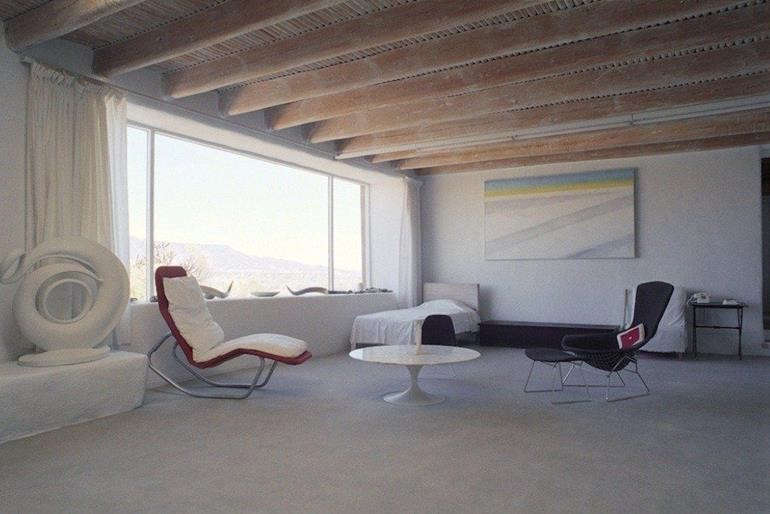
“As more communities preserve artists’ studios and open them to the public and as entities like the National Trust for Historic Preservation and the Luce Foundation help with grants and national visibility, we will all have more opportunities to learn from the work and living spaces of artists of the past. And we will learn things no piece of paper can teach us” Corn, W. (2005).
The shared Indo-Pak identity of Shergil’s and the lack of a mainstream modernist art situation and awareness in Pakistan, no attention has been given to its heritage, legacy or preservation – yet creative researchers or
curious pilgrims from across the border (India) have been visiting, therefore the street dwellers are well aware of the symbolic status of mansion number 23 and always kind and open to let visitors, visit and explore. So who is going to take this matter forward?
“These properties need advocacy from art historians as well as from preservationists. To date, studios in America (Europeans are better at this) have been preserved on an ad hoc basis, usually because of the family’s or community’s action. Many have tiny budgets and a handful of loyal volunteers who keep them open to the public. Too few have strong funding and professional administration.” Corn, W. (2005). Europe and America are opposite to Sher Gill’s context – This is a disregarded matter in the subcontinent as there is too limited a number of heritage home examples. The coveted house museum of the poet and Philosopher of the east, Allama Iqbal, the man who is known to have given the vision of Pakistan has lived in my city Lahore since decades but only a few know about it – if core poetic – political history in the form of Iqbal’s abode and possessions is ignored, the modern art narrative is another unidentifiable realm. Yet it is our job to bring forward , to inform, share, represent and know – more.
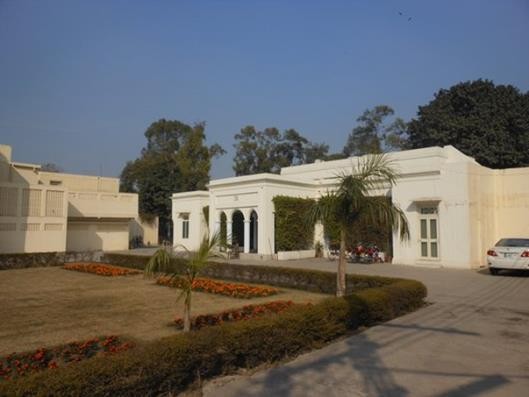
I visited the beautiful Prague inspired villa (as the artist lived in Europe for many years) house museum of Shakir Ali ( iconic modern Pakistani artist) Lahore in 2016, a part of the team informed me enthusiastically that they were presenting the legendary artist Anna Molka Ahmed’s work in a bureaucratic art event (as it was part of the Shakir Ali Collection) the oil-paintings appeared dull so the organizer took them in the back yard and washed them with a water pipe – they shared this incident with pride and no regrets – even the memory of listening to this anecdote puts me in shame, tables have to be turned with proper knowledge, expertise and the responsible people to do it.
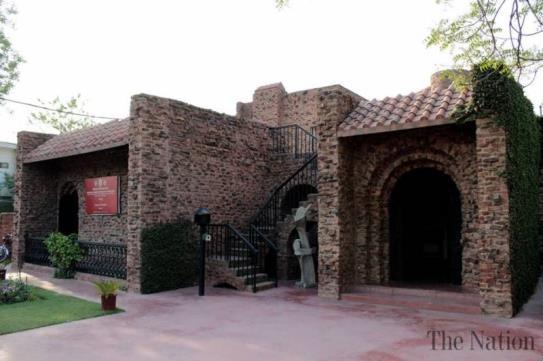
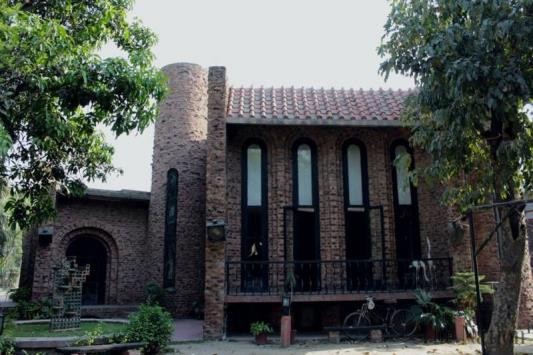
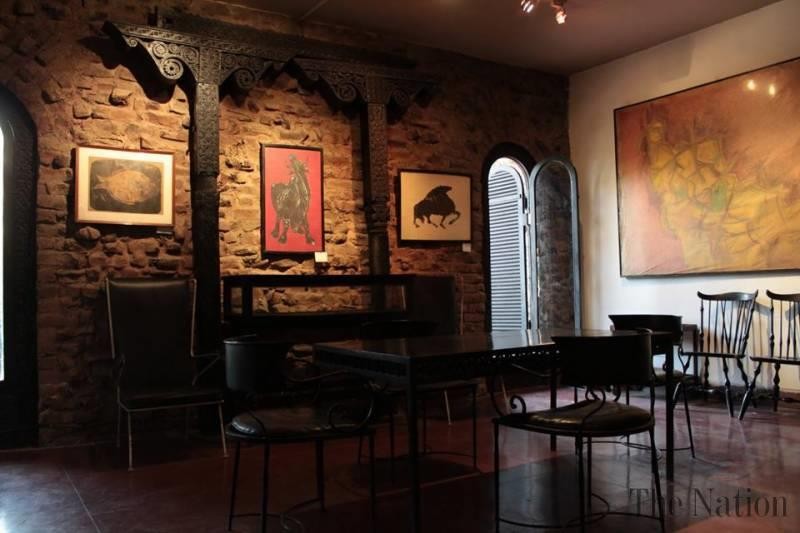
Going back into a historic understanding of artist studios, Alice Pike
Barney’s (1860 – 1931) Studio House, Washington D.C, modeled after the
fashionable London Kesington and Chelsae artist neighborhoods and the Isabella
Stewart Gardner’s place in Boston are two landmark examples of multifarious,
engaged artist habitats that celebrated the arts with designated spaces, floors
and rooms in them. “The largest and most conspicuous room in Barney’s house was
a studio designed to accommodate dozens of guests. With its dark wood paneling,
stained-glass windows, and Mercer tile floors, the room housed Barney’s easel
in one corner while leaving plenty of room for people to congregate. She used
the studio, with its substantial balcony over a grand stone fireplace, not only
as a workplace but as a performance area for modern music, dance, and drama.
Though I knew the fin-de-siècle aesthetic movement academically, living in the
material spaces of Barney’s studio house allowed me corporally and
psychologically to experience its heightened idealism and hothouse
theatricality.” Corn, W. (2005).
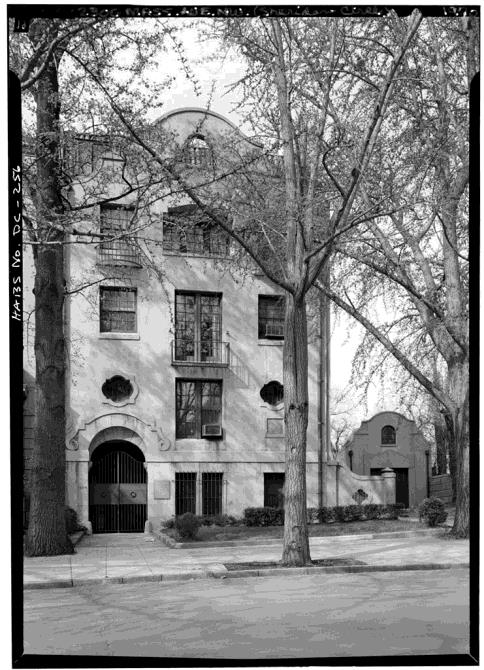
Alice Pike Barney’s studio house Figure 12
source: (S.R. Stinson, 2018)
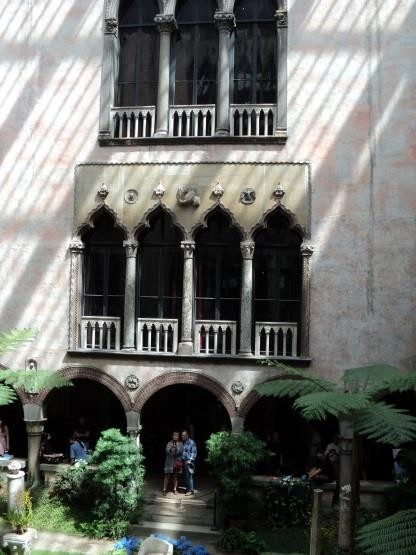
source: Sehr Jalil
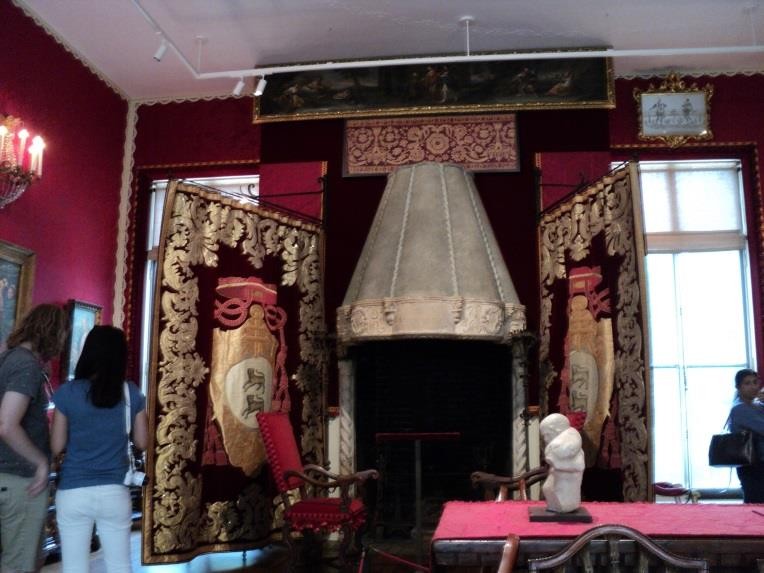
source: Sehr Jalil
As opposed to that the modernist studio was a place of personal solace – they defied theatricality and pretentiousness, there was no urgency for the studio to be a place to boast travels, knowledge and beauty, they were dedicated to work.
“With O’Keeffe we feel close to Emerson and Thoreau, in that her home exudes a desire to live in peaceful coexistence with the land around it. It is not the wealth of accumulation but her Zen-like absences that impress us” Corn, W. (2005).
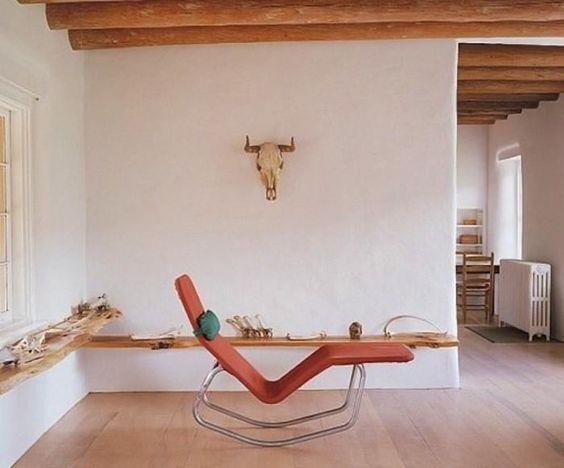
source: (Stay Cool, Mom., n.d.)
source: (Stay Cool, Mom., n.d.)
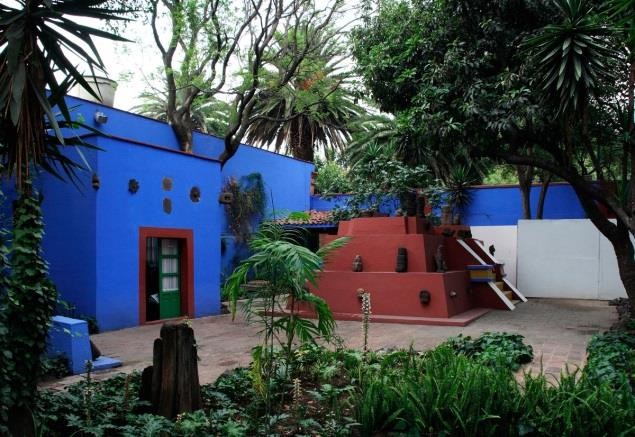
Legendary artist Farida Kahlo’s abode ‘the blue house’ was given the status of a museum in 1958 four years after the artist’s demise. The house relishes some of the most crucial works and has preserved her personal objects. “Every object in the Blue House tells us something about the painter: the crutches, corsets, and medicines attest to her physical sufferings and the many operations she had to undergo. The ex- votive tablets, toys, clothing, and jewelry reveal a Frida who was obsessed with hoarding objects” (Trujillo, n.d.)
This juxtaposition of a few artists’ homes and studios through the world in line with Sher Gil’s and O’Keeffe’s case study has given various insights and reflections. The understanding and evolution, context of studios has changed though time from luxurious salons, flamboyant curious cabinets, and theatrical atmospheres to intimate homely places. O’Keeffe and Sher Gil are modernists and contemporaries – their approach and relationship with space was personal and work oriented but the current positioning of their abodes is opposite. In Sher Gil’s case and probing into contrasting examples the concern as to which factors, values and procedures decipher and declare the status of an artist’s home? It is primarily the above mentioned dearth of relevant art-research-historic and preservationist advocacy. Laws, trajectories and methodologies, grants are only there to follow when heritage is suspected and recognized. Criteria and contexts fluctuate ‘within and for’ these personal ‘meccas’ but they are institutions of ‘art and knowledge’ if and when seen through an appropriate lens.
References
Ali, S. (2017). Shakir Ali – The maestro. [online] The Nation. Available at: https://nation.com.pk/12-Jul-2017/shakir-ali-the-maestro [Accessed 1 Dec. 2018].
CDMX, S. (n.d.). Luis Barragán House Studio • Attractions. [online] Cdmxtravel.com. Available at: http://cdmxtravel.com/en/attractions/luis-barragan- house-studio.html [Accessed 1 Dec. 2018].
Centre, U. (n.d.). Luis Barragán House and Studio. [online] Whc.unesco.org. Available at: https://whc.unesco.org/en/list/1136 [Accessed 17 Nov. 2018].
Corn, W. (2005). Artists’ Homes and Studios. American Art, 19(1), pp.2-11.
D’Arc Taylor, S. (2015). Secret weapon to save Beirut’s heritage: Art.
[online]
CNN Travel. Available at: https://edition.cnn.com/travel/article/cnngo-beirut-ottoman- houses/index.html [Accessed 1 Dec. 2018].
Frank, B. (2018). Georgia O’Keeffe Home and Studio. [online] 10Best. Available at: https://www.10best.com/destinations/new-mexico/santa- fe/abiquiu/attractions/georgia-okeeffe-home-and-studio/ [Accessed 1 Dec. 2018].
S.R. Stinson. (2018). Alice Pike Barney Studio House. [online] Available at:
s://www.srstinson.com/srstinson–projects-home/2017/5/15/alice-pike-barney- studio-house [Accessed 1 Dec. 2018].
Stay Cool, Mom. (n.d.). Georgia O’Keeffe, her Abiquiu home and studio.
[online]
Available at: https://www.staycoolmom.net/news/2017/11/14/in-honor-of-georgia- okeeffe-her-beautiful-abiquiu-home-and-studio [Accessed 2 Dec. 2018].
Susannah Rigg, S. (n.d.). Museo Frida Kahlo, Mexico City, Mexico – Culture Review. [online] Condé Nast Traveler. Available at: https://www.cntraveler.com/activities/mexico-city/museo-frida-kahlo [Accessed 1 Dec. 2018].
Tripadvisor.com. (n.d.). Alama Iqbal Museum – Picture of Alama Iqbal Museum, Lahore-TripAdvisor.[online]Availableat: https://www.tripadvisor.com/LocationPhotoDirectLink-g295413-d2534922- i176390412-Alama_Iqbal_Museum-Lahore_Punjab_Province.html [Accessed 1 Dec. 2018].
Trujillo, H. (n.d.). The Blue House – Frida Kahlo Museum. [online] Museofridakahlo.org.mx. Available at: http://www.museofridakahlo.org.mx/en/the- blue-house/ [Accessed 2 Dec. 2018].
Pinterest. (n.d.). A light designed by sculptor Isamu Noguchi. [online] Available at: https://www.pinterest.com/pin/309270699385775241/?lp=true [Accessed 1 Dec. 2018].
 Sehr Jalil | is there anything that is not art? | blog
Reblogged this on sjraja and commented:
Hope you enjoy
LikeLike
I’m a bit embarrassed to say I hadn’t heard of Amrita Sher-Gil before today, but when I saw images of her paintings on line, I fell in love with her work. I love, LOVE her style and her use of colour. Thank you for introducing her work to me.
LikeLiked by 1 person
Pleasure to have introduced her and Thank You for sharing your thoughts here.. Means so much🙏🏼❤️ I teach art history and no matter how deep I dig in I’m always discovering artists and practices from around the world.. through history.. that I have /had no idea about.. So you shouldn’t be embarrassed at all..not knowing means that we ‘can’ still know.. .. 😊
LikeLiked by 1 person